
The £58,594 Bill: What Deferred Repairs Really Cost Housing Association Boards
By Tricity Labs, Technical Team — Independent retrofit measurement & verification, working to BS 40101 principles
Deferred repairs don't disappear when they're pushed into next year's budget cycle -- they compound. Modelled research suggests poor maintenance can strip £20,115 to £58,594 from a rental property's value depending on region, and that's before legal exposure under Awaab's Law is factored in. This guide breaks down where that cost actually comes from, how poor workmanship quietly turns a cheap job into an expensive bill, and what a defensible repair record needs to look like.
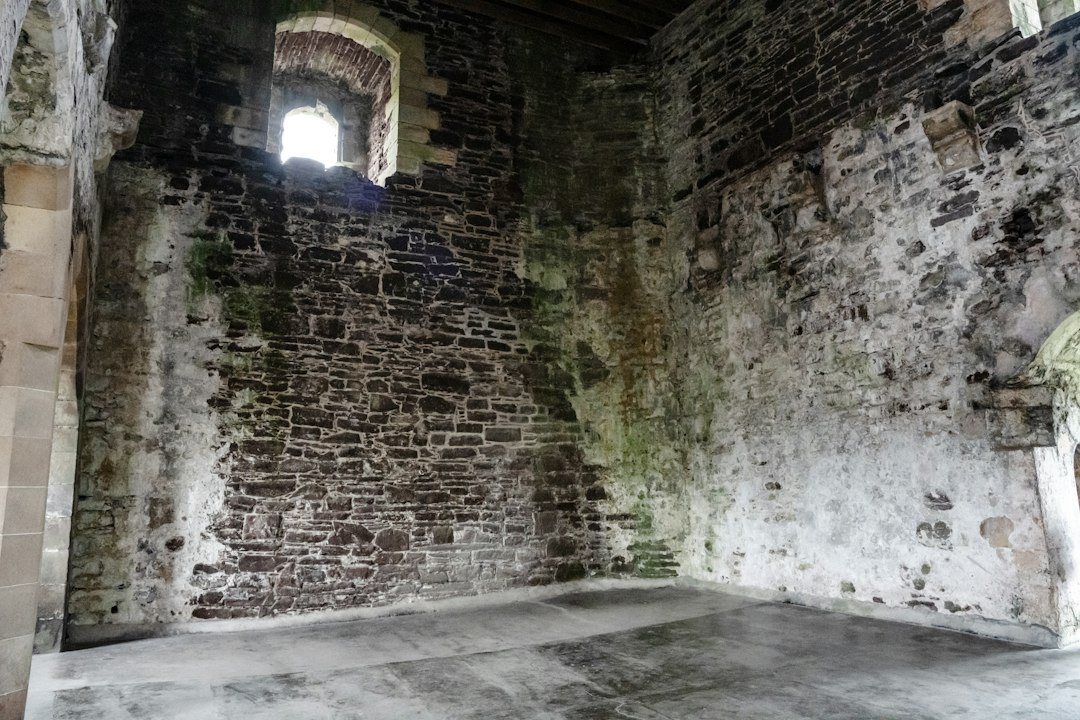 Photo by Winston Tjia via Unsplash (source)
Three things to know:
- Deferred repairs are a capital risk that shows up at sale, refinance, or regulatory audit -- not just an annoying line on the maintenance budget.
- Poor workmanship on an early fix often seeds a second, bigger repair later, which is how a modest job turns into an expensive bill nobody budgeted for.
- A checklist alone doesn't protect you; it needs to be applied consistently across the whole portfolio and backed by continuous, independent evidence of property condition.
Key Takeaways
| Point | Detail |
|---|---|
| Neglect has a measurable price tag | Modelled research from property management firm Rushbrook estimates poor maintenance can reduce a rental property's value by 10 to 15 per cent -- five-figure losses in every English region, and close to £58,594 in London. |
| Awaab's Law changes what 'on time' means | Legal timeframes for damp, mould and other hazards mean the gap between identification and remediation is now scrutinised as closely as the repair itself. |
| Poor workmanship is a hidden multiplier | A repair done badly or too cheaply the first time rarely holds -- it tends to resurface as a larger, more expensive bill once the underlying cause reasserts itself. |
| Budget cycles and legal deadlines don't align | Annual budget cycles were built around discretionary maintenance planning; statutory hazard deadlines don't wait for the next financial year to start. |
| Property condition is now a pricing conversation | Buyers, lenders and investors read patchy maintenance records as risk, which feeds directly into the property prices they're willing to offer or the terms they'll lend on. |
| Benchmarking beats gut feel at scale | Comparing a property against similar stock -- rather than judging it in isolation -- is what turns a pile of inspection data into a prioritised repair list. |
Table of Contents
- Why Deferred Repairs Stopped Being a Discretionary Decision
- The True Cost of Deferred Repairs: What the Numbers Actually Show
- Poor Workmanship and the Expensive Bill That Follows It
- Property Condition, Property Prices, and Why Buyers Look Twice
- Breaking the Budget Cycle: Building a Checklist That Actually Holds Up
- From Annual Snapshot to Continuous Evidence of Property Condition
- Using a Benchmark to Decide Where the Money Goes First
- Where Tricity Labs Fits Into the Deferred Repairs Conversation
- Sources
Why Deferred Repairs Stopped Being a Discretionary Decision
For a long time, housing providers treated repair timing as a scheduling problem -- something to fit around available budget rather than a fixed deadline. That assumption no longer holds. Awaab's Law and the Decent Homes Standard now attach enforceable timeframes to hazards like damp and mould, in both social and private rented housing, which means the decision to 'wait until next quarter' carries legal weight it didn't carry a few years ago.
This shift changes the nature of the risk. It's no longer just about whether a repair eventually gets made; it's about whether there's a defensible record showing when the hazard was identified and how quickly it was addressed. A housing association that can't produce that timeline is exposed in a way that simply didn't exist before these rules took effect.
The commercial pressure has sharpened at the same time. Lenders and investors are looking more closely at property condition before they commit capital, and a portfolio with gaps in its maintenance history is a harder asset to finance -- regardless of how the buildings actually look on the day of a viewing.
The True Cost of Deferred Repairs: What the Numbers Actually Show
Research from property management firm Rushbrook, covered in coverage of landlord property maintenance value loss, estimates that poor maintenance can strip between £20,115 and £30,172 from an average rental property in England, rising to as much as £58,594 for a typical landlord-owned home in London. The percentage loss modelled -- 10 to 15 per cent -- is consistent nationally; only the pound figure shifts with local property prices.
The regional spread is worth sitting with. The South East, South West and East of England all show potential losses above £30,000, while even lower-value regions such as the North East and Yorkshire and the Humber face losses above £20,000. As Rushbrook's managing director Roma Sharma has put it, a minor issue caught early can usually be resolved efficiently, whereas letting it deteriorate produces a larger repair bill, tenant disruption, and a decline in the property's overall condition.
Two caveats matter here. Rushbrook hasn't published the underlying regional value data behind these figures, and the 10-15 per cent depreciation range is a modelled assumption rather than a directly measured outcome across a tracked sample of properties. Even allowing for that, the direction of the argument holds up: deferring a repair rarely removes the cost, it just relocates it to a later date and adds interest in the form of a bigger job.
Treat the maintenance budget as insurance against a larger, involuntary capital loss at sale or refinance -- not as a discretionary cost centre to trim when margins tighten.
Poor Workmanship and the Expensive Bill That Follows It
Not every deferred repair starts with neglect. Sometimes the original fix was made on time but done badly -- a patch instead of a proper repair, a rushed job that addresses the symptom rather than the cause. Poor workmanship is one of the quieter drivers of the true cost of deferred repairs, because it disguises a live problem as a closed one.
A damp patch painted over rather than traced to its source, or a leak stopped without fixing the failed seal behind it, tends to come back -- usually worse, and usually more expensive to resolve the second time. By the time it resurfaces, the hazard may have spread to adjacent structure, insulation, or a tenant's belongings, turning what could have been a modest repair into an expensive bill that also carries a compensation claim.
This is part of why evidence at the point of remediation matters as much as evidence at the point of identification. A record that shows a repair was completed on a given date says little if it doesn't also confirm the repair was done to a standard that actually held. Housing providers working with contractors on repairs benefit from agreeing what 'done properly' looks like -- and how it's evidenced -- before the work starts, not after a hazard reappears.
🛡️ Protect Your Tenants and Your Funding with Independent Evidence
Reactive repairs are costly, and regulatory scrutiny is increasing. Move from assumption to evidence with Tricity Labs.
Book a DemoProperty Condition, Property Prices, and Why Buyers Look Twice
Property condition used to be a factor buyers weighed alongside location, size and price. Increasingly, it's a factor that shapes the price itself. A property with a clean, continuous maintenance record commands a different conversation at valuation than one with gaps, disputed repair history, or unresolved hazard flags -- and that difference shows up directly in property prices at sale or refinance.
This is especially visible at portfolio scale. A lender assessing a block of stock isn't just pricing the buildings; they're pricing the risk that hidden deferred maintenance surfaces after the deal closes. Sellers who can produce a structured condition history -- rather than a folder of disconnected inspection reports -- are negotiating from a stronger position, because they've already answered the question a cautious buyer would otherwise have to price in as uncertainty.
For housing associations specifically, this dynamic also affects grant funding, stock transfers and joint ventures, where funders increasingly expect to see verifiable condition data rather than self-reported summaries. Independent evidence of upkeep is becoming table stakes for these conversations, not a nice-to-have.
Breaking the Budget Cycle: Building a Checklist That Actually Holds Up
Most repair checklists fail not because they're incomplete on paper, but because they're inconsistently applied across a portfolio and misaligned with how budget cycles actually work. A checklist followed diligently on one estate and ignored on another doesn't produce a defensible record -- it produces a patchwork that falls apart the moment a tenant complaint or regulator's evidence request tests it.
A working checklist needs to go further than listing hazard categories like damp, mould and disrepair. It should specify who is responsible for spotting each hazard type, what evidence gets captured at the point of discovery, and what remediation timeframe applies once a hazard is confirmed -- ideally mapped against the statutory clock rather than the next scheduled budget round.
Housing providers building their own version of a repairs checklist often find it useful to benchmark against a structured reference point rather than starting from a blank page, which is part of why a dedicated True Cost of Deferred Repairs checklist can shortcut months of internal drafting and disagreement about what 'good enough' looks like.
Align your checklist's remediation timeframes to the statutory deadlines first, then fit the budget cycle around them -- not the other way round. Legal clocks don't pause for the next financial quarter.
From Annual Snapshot to Continuous Evidence of Property Condition
A single annual inspection captures what a property looked like on one day. It says very little about the eleven months either side of that visit, and hazards like damp rarely time their appearance around the inspector's calendar. This gap is the core weakness that continuous property condition monitoring is designed to close.
Instead of treating condition assessment as a periodic event, a continuous approach builds a rolling record -- routine checks, tenant-reported issues, contractor notes and sensor data all feeding one ongoing picture of a property's real condition. When a hazard does show up, there's already a baseline to compare it against, which speeds up both the diagnosis and the paper trail needed to prove the timeline was met.
At portfolio scale, this stops being a nice-to-have and becomes operationally necessary. A housing association managing several thousand homes can't rely on an inspector's memory or a scattered set of spreadsheets to know which properties are trending toward a hazard threshold before it becomes a statutory breach.
Using a Benchmark to Decide Where the Money Goes First
Once you accept that deferred repairs carry a real cost, the next question is sequencing: with limited budget, which properties get attention first? Judging each home in isolation tends to overweight whichever property was inspected most recently, rather than the one actually deteriorating fastest.
A sounder approach benchmarks properties against comparable stock -- similar age, construction type, exposure -- so a property that looks worse on one metric because of how it was built doesn't get flagged ahead of one that's genuinely declining. This separates the evidence layer, captured consistently regardless of who collects it, from the interpretation layer, which is where outliers actually get identified.
This is where many in-house processes fall short. They generate plenty of raw inspection data but lack a structured way to compare it across hundreds or thousands of homes, which means the properties most at risk of an expensive bill down the line can sit unflagged simply because no one had a comparative baseline to check them against.
Where Tricity Labs Fits Into the Deferred Repairs Conversation
None of this requires guessing at what a property will look like in five years -- it requires better evidence about what it looks like now, and a way to compare that across a whole portfolio. That's the gap Tricity Labs' tools are built to close, using structurally independent measurement rather than self-reported maintenance logs.
Detect and Verify are built for exactly the identification-to-remediation timeline this article describes, giving housing providers a consistent evidence format from the moment a hazard is spotted through to sign-off. Evidence and Verity turn that into the kind of continuous, defensible record that holds up under tribunal scrutiny, funder due diligence, or a regulator's request -- the difference between a folder of disconnected reports and a queryable history of property condition.
Benchmark and the Stock Performance Index address the sequencing problem: they compare properties against similar stock so limited repair budgets go where deterioration is real, not just where the most recent inspection happened to land. Housing associations can see how these pieces fit together on the platform page, and contractors working on remediation can review what's expected of them via the contractors page.
If you're weighing up how much a gap in your current evidence trail might already be costing you, that's worth a conversation before the next budget cycle locks in spending decisions rather than after.
See how much Tricity Labs can save your housing association through reduced repairs, avoided penalties, and accelerated funding.
Savings Photo by TruckRun via Unsplash (source)
Related reading: how housing associations use continuous evidence, housing providers working with contractors on repairs, what tenants can expect from a documented repair, retrofit-evidence, see how these pieces fit together on the platform page, about Tricity Labs' independent measurement approach
Sources
- Neglected repairs could cost London landlords almost £59,000
- Originally explored in: Identifying and Remediating Hazards | Tricity Labs
About Tricity Labs
The team behind Tricity Labs' Verity platform, delivering independent pre- and post-retrofit measurement and verification from existing smart meter data for housing associations and retrofit contractors.