
Continuous Property Health Audit: A Complete Guide for Housing Providers
By Tricity Labs, Technical Team — Independent retrofit measurement & verification, working to BS 40101 principles
A Continuous Property Health Audit replaces the once-a-year inspection snapshot with always-on measurement of temperature, humidity, and occupancy, so cold and damp conditions surface while they can still be fixed rather than after a complaint or a coroner's report. It works through a lightweight IoT sensor deployment that needs no electrician, no rewiring, and no disruption to tenants, producing real time evidence that housing associations, funders, and regulators can actually rely on. Done properly, it turns building performance from an annual guess into a continuously validated record.
 Photo by luntan6644 via Pixabay (source)
Three things to know:
- Continuous audits measure conditions every day, not once a year — the gap between inspections is exactly where welfare risk hides.
- Modern sensor-based deployment needs no wiring, no consent process, and installs in under an hour with zero disruption to residents.
- Evidence is only as good as its independence — a provider with no retrofit delivery arm has no incentive to shade what the data shows.
Key Takeaways
| Point | Detail |
|---|---|
| Annual inspections leave 364 blind days a year | A single visit tells you what a home looked like on one afternoon. It cannot tell you whether that home was cold for three weeks in February or damp every night a family slept there. |
| IoT sensors convert conditions into continuous data | Battery-powered temperature, humidity, and occupancy sensors placed in bathrooms, utility rooms, and bedrooms turn a static property record into a live feed that updates around the clock. |
| Real time evidence underpins Awaab's Law Phase 2 compliance | Excess cold is one of seven hazard categories enforceable from 30 November 2026, and continuous measurement is the only practical way to prove a home stayed above the WHO 18°C minimum. |
| Independence matters as much as the data itself | Evidence produced by an organisation with a retrofit delivery interest is structurally weaker at funder audit and in dispute than evidence from a provider with no stake in the outcome. |
| A checklist keeps provider comparison objective | Installation method, data ownership, hazard thresholds, and reporting format vary enormously between platforms — a written checklist stops sales language substituting for evidence quality. |
| Continuous audits also verify retrofit performance | The same sensors that flag a cold home before intervention can confirm, with dated readings, whether the retrofit that followed actually improved conditions. |
Table of Contents
- What Is a Continuous Property Health Audit?
- Why Annual Inspections Miss the Real Picture
- How IoT Sensor Deployment Powers Continuous Monitoring
- What Real-Time Evidence Actually Looks Like
- How to Evaluate a Continuous Property Health Audit Provider
- Independence: Why 'No Retrofit Arm' Matters
- Continuous Property Health Audit for Housing: Regulatory Context
- Where Tricity Labs Fits
- Sources
What Is a Continuous Property Health Audit?
A Continuous Property Health Audit is an ongoing, sensor-based assessment of how a home actually performs — temperature, humidity, and occupancy measured continuously rather than captured once a year during a scheduled visit. Instead of a single point-in-time inspection report, it produces a rolling record that updates as conditions change, so a cold spell or a damp patch shows up in the data days before it shows up on a wall or in a complaint.
The approach grew out of a simple gap in how social housing has traditionally been managed: providers know a great deal about a property on inspection day and almost nothing about it the rest of the year. Verity, Tricity Labs' sensor platform, is one practical implementation of this idea — it measures continuously from the point of installation and flags a home the moment conditions cross a defined threshold, rather than waiting for the next visit.
This matters most for housing associations managing large, ageing portfolios where a handful of staff cannot physically visit every property every month. A continuous audit does the constant watching that a human inspection schedule was never designed to do, and it does it without adding to a maintenance team's workload.
Why Annual Inspections Miss the Real Picture
Most welfare risks in housing are identified after the fact — after a complaint is logged, after a case is opened, after a regulator or coroner asks why nobody noticed sooner. An annual stock condition survey is a legitimate tool, but it is a snapshot, and snapshots miss patterns that only emerge over weeks or months.
Consider a home that is cold, damp, and occupied. On the day of inspection, the heating might be on and the reading might look fine. The risk isn't in that one reading — it's in what happens on the other 364 days, particularly overnight and during cold snaps, when nobody from the housing team is present to observe it.
Inter-room comparison makes the gap even clearer. A single reading in a living room can look acceptable while a bedroom two doors down sits several degrees colder — a pattern consistent with fuel poverty that no single annual visit, and no single sensor, would ever catch.
If your current stock condition data is more than 12 months old for any property flagged as vulnerable, treat that gap itself as a risk indicator — not just the readings on file.
How IoT Sensor Deployment Powers Continuous Monitoring
The mechanics of a modern IoT sensor deployment are deliberately unglamorous. Small, battery-powered sensors — roughly palm-sized — are placed in the rooms where cold and damp are most likely to occur and most likely to go unnoticed: bathrooms, utility rooms, hallways, and bedrooms. There is no drilling, no wiring, and no electrician required, which means no separate consent process and no disruption to the household living there.
Each sensor connects wirelessly to a single gateway in the property, which transmits readings securely off-site. A typical installation takes under an hour per home, and because nothing is hardwired, the same sensors can be relocated or redeployed if a tenancy changes or a portfolio priority shifts.
Data handling is intentionally narrow in scope. These deployments capture environmental data only — temperature, humidity, and passive occupancy detection via infrared — with no cameras, no audio, and no personal data collected. Housing teams see conditions, not behaviour, which keeps the deployment proportionate to the welfare question it's answering.
Ask any prospective sensor provider exactly what occupancy detection means in their system — passive infrared confirming a room is in use is very different from anything resembling behavioural tracking, and the distinction matters for tenant trust.
What Real-Time Evidence Actually Looks Like
Real time evidence isn't a dashboard that looks busy — it's a timestamped record that ties a specific condition to a specific date, room, and property, in a form that stands up to scrutiny. When a bedroom drops below the WHO 18°C minimum, or humidity crosses the 70% threshold associated with rising mould risk, that event is logged the moment it happens, not reconstructed from memory weeks later.
Over time, this produces a portfolio-level view rather than just a property-level one. Homes can be ranked by measured welfare risk — worst first — so resident services teams know where to prioritise attention instead of working through properties in whatever order a spreadsheet happens to list them.
For funders and regulators, the same records double as compliance documentation. Structured, timestamped flags map directly onto Warm Homes funding submissions, Awaab's Law Phase 2 hazard reporting, and RSH consumer standards evidence — because the underlying data was captured as it happened, not assembled retrospectively to fit a form.
How to Evaluate a Continuous Property Health Audit Provider
Knowing how to evaluate a Continuous Property Health Audit provider starts with separating marketing claims from measurable capability. Ask what is actually being measured (temperature, humidity, occupancy — or something thinner), how often it updates, and whether thresholds are tied to recognised standards like the WHO 18°C minimum rather than an arbitrary internal cutoff.
A practical Continuous Property Health Audit checklist should cover installation method (does it need an electrician or a consent process?), data ownership (who holds the record, and can it be exported for a funder audit?), independence (does the provider also sell or deliver retrofit works?), and reporting format (is output structured for board papers, RSH TIA reporting, and pre/post retrofit comparison, or just a generic dashboard?).
It's worth testing this against a small pilot before committing across a portfolio. A short scoping conversation — cohort size, property type, which welfare signals matter most — usually reveals within a few weeks whether a platform's evidence holds up once it's tested against real homes rather than a sales deck.
Request a sample output report before signing anything. If it can't clearly show a timestamped flag, the threshold it breached, and the property it relates to, it isn't evidence yet — it's just a chart.
Independence: Why 'No Retrofit Arm' Matters
Building Performance Evaluation under BS 40101 requires the organisation producing the evidence to be independent from the retrofit delivery chain — and that requirement exists for a reason. If the same company that measures a home's performance also profits from recommending and installing the fix, the incentive to find a problem worth funding is baked into the relationship before a single sensor is placed.
A provider with no retrofit delivery arm, no supply relationship, and no financial interest in what the evidence recommends is structurally different. Tricity Labs does not install, design, or commission retrofit works — it surfaces what was measured (temperature, humidity, occupancy, dates) and leaves the inference and the intervention decision to the housing provider and their contractors.
This distinction becomes concrete the moment evidence is challenged — at a funder audit, an RSH inspection, or in a dispute over property conditions. Being fully independent and validated isn't a marketing line at that point; it's the difference between evidence that holds up and evidence that gets set aside because the source had something to gain from the conclusion.
Before a pilot begins, ask directly: 'Does your organisation ever install or profit from the retrofit work your evidence recommends?' A clear, immediate no is the answer you want.
Continuous Property Health Audit for Housing: Regulatory Context
Adopting a Continuous Property Health Audit for housing portfolios is increasingly less a matter of best practice and more a matter of regulatory timing. Awaab's Law Phase 2, enforceable from 30 November 2026, names excess cold as one of seven hazard categories that housing providers must be able to evidence and act on — and continuous measurement is the most direct way to prove a home stayed within safe thresholds throughout a tenancy, not just on inspection day.
RSH consumer standards reporting adds a parallel pressure. Every welfare flag generated by continuous monitoring becomes a timestamped engagement record that can feed directly into Tenant Involvement and Accountability (TIA) reporting, rather than requiring a separate paper trail to be assembled after the fact.
The same data also closes the loop on retrofit programmes. Independent, pre- and post-intervention readings show whether a retrofit measure actually changed conditions in a specific home — evidence that matters as much to a funder checking value for money as it does to a resident wondering whether the work made any real difference.
Where Tricity Labs Fits
Verity is Tricity Labs' answer to the core problem this guide describes: a lightweight sensor deployment that measures temperature, humidity, and occupancy continuously, without an electrician or a consent process, and turns that into welfare flags and portfolio risk rankings your team can act on. It's built specifically for housing associations that need funder-ready, BS 40101 independent evidence rather than another dashboard nobody checks.
Around Verity sit the tools that carry the evidence further: Detect and Evidence structure the raw sensor data into defensible, timestamped records; Verify supports pre- and post-retrofit comparison so an intervention's impact can be proven rather than assumed; and Benchmark and the Stock Performance Index let a portfolio be compared against itself over time, or against wider sector performance, instead of judged in isolation.
None of this requires a retrofit delivery relationship, because Tricity Labs doesn't have one — no installation arm, no supply chain interest, no stake in what the evidence recommends. If you're weighing up how to evaluate a Continuous Property Health Audit provider for your own stock, that structural independence is worth testing directly against whatever else is on your shortlist.
To see how this fits alongside existing retrofit evidence requirements, or to talk through a pilot scoped to your portfolio, the platform overview and housing associations pages set out the detail, and a short conversation is usually enough to define cohort size and priorities.
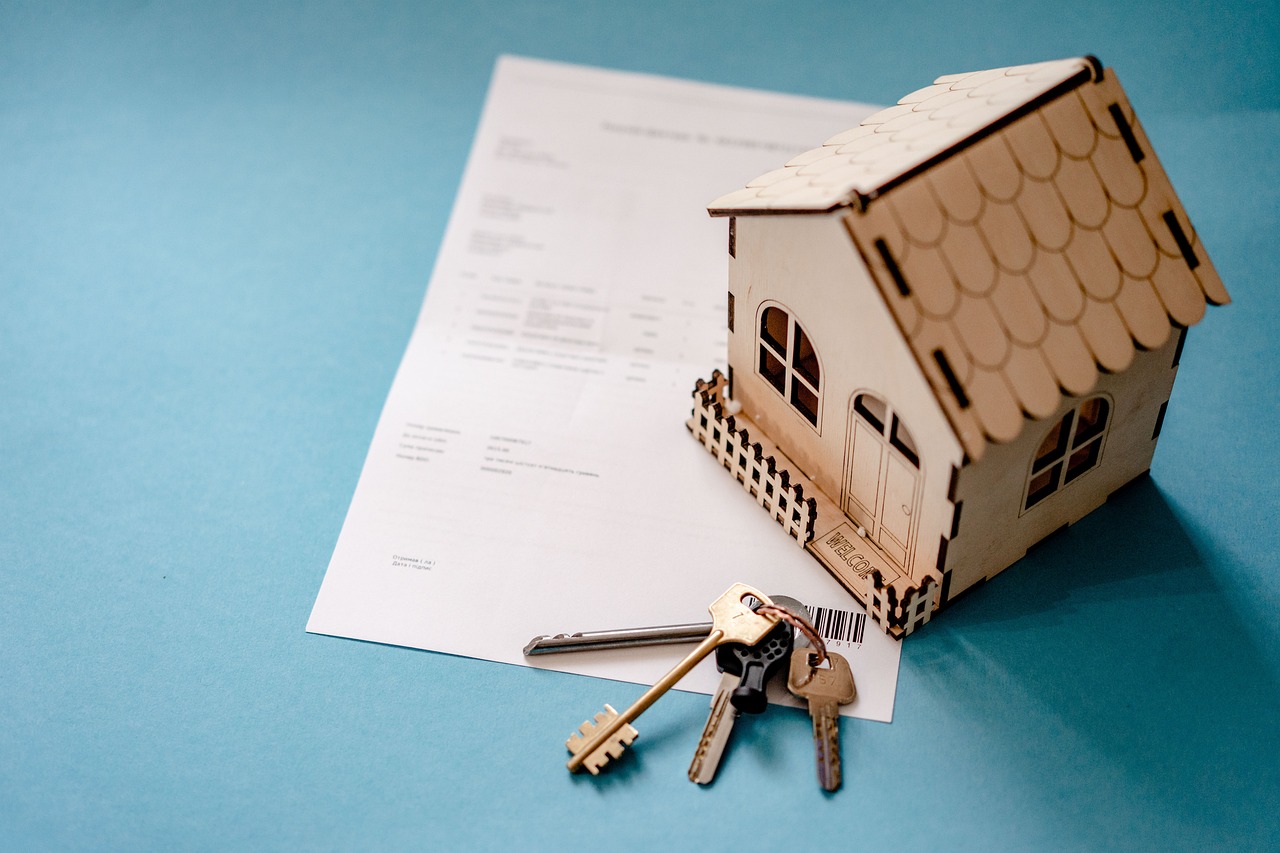 Photo by OleksandrPidvalnyi via Pixabay (source)
Related reading: housing associations, tenants, contractors, retrofit evidence, platform overview, about Tricity Labs
Sources
About Tricity Labs
The team behind Tricity Labs' Verity platform, delivering independent pre- and post-retrofit measurement and verification from existing smart meter data for housing associations and retrofit contractors.