
From Hardware to Evidence: What Asset Directors Must Prove Before the Next Compliance Audit
By Tricity Labs, Technical Team — Independent retrofit measurement & verification, working to BS 40101 principles
Installing sensors is the easy part; producing evidence a regulator, funder, or court will actually accept is the part most housing providers get wrong. The move from hardware to evidence means treating the sensor as step one of a chain that ends in a timestamped, independently governed report — not as the deliverable itself. Get the chain wrong anywhere along the way and the hardware, however good, produces nothing you can defend.
 Photo by Christian Chen via Unsplash (source)
Three things to know:
- Hardware without an unbroken, independently governed chain of custody isn't evidence — it's a device with a monthly invoice attached.
- Screening a portfolio before installing a single sensor keeps welfare risk visible everywhere, not just in the homes someone happened to visit.
- Awaab's Law, the RSH Consumer Standards, and BS 40101 all assume continuous, timestamped proof — an annual inspection with a photo no longer clears the bar.
Key Takeaways
| Point | Detail |
|---|---|
| Hardware is the starting point, not the deliverable | A sensor generates readings; it doesn't generate evidence until those readings are captured, timestamped, and reported in a form that survives scrutiny. |
| Independence removes the conflict of interest | When the same organisation installs a retrofit and reports on its performance, the incentive to report success is built in — structurally separate monitoring avoids that entirely. |
| Screen before you deploy | A two-tier model — portfolio-wide screening first, targeted hardware second — keeps cost proportionate while still surfacing portfolio wide welfare risk early. |
| Timestamped proof beats a nicer dashboard | An immutable, time-stamped record that can't be edited after the fact carries more weight at audit than any amount of visual polish. |
| Compliance-ready means exportable on demand | A report aligned to BS 40101 or equivalent should be generatable in minutes, not assembled by hand from raw exports the week before an inspection. |
| A written checklist beats a sales conversation | Connectivity independence, data governance, installation disruption, and reporting format should all be settled on paper before any contract is signed. |
Table of Contents
- What "From Hardware to Evidence" Actually Means
- How to Evaluate From Hardware to Evidence: A Practical Checklist
- From Sensor to Timestamped Proof: How Data Moves From Home to Dashboard
- Independence and the Conflict of Interest Problem
- Portfolio-Wide Welfare Screening Before Hardware Deployment
- Compliance-Ready Reporting for Regulators and Funders
- Common Pitfalls When Moving From Hardware to Evidence
- Where Tricity Labs Fits Along the Chain
- Sources
What "From Hardware to Evidence" Actually Means
For most of the sector's history, proving a home was safe meant a paper stock survey or a periodic inspection — a snapshot, taken once, filed away, and rarely revisited unless something went wrong. The phrase "from hardware to evidence" describes the shift away from that model: sensors and gateways are now cheap and reliable enough to run continuously, but the value they create only exists if what they capture can stand up months or years later in front of a regulator, a funder, or a coroner's court.
That shift has been forced as much by regulation as by technology. Awaab's Law and the 2024 RSH Consumer Standards both assume a housing provider can show what was actually happening inside a home over time — not just what a surveyor noted on one visit months earlier. Hardware makes that possible in principle; it doesn't guarantee it in practice.
It's worth being precise about what doesn't count. A consumer smart-home sensor, a wifi thermostat, or a plug-in humidity gadget captures some of the same numbers, but none of it was built with an audit trail, a governance structure, or a compliance framework in mind. Evidence, in the sense regulators mean it, is a distinct category — and getting from hardware to evidence for housing means building every layer with defensibility as the starting requirement, not an afterthought bolted on later.
How to Evaluate From Hardware to Evidence: A Practical Checklist
Knowing how to evaluate From Hardware to Evidence claims starts with separating what a supplier says in a demo from what actually happens on a wet Tuesday when a tenant's router is unplugged. Ask directly what happens to data collection the moment a property loses its own connectivity, or a tenant moves out mid-tenancy — a system genuinely built for evidence shouldn't miss a beat either way.
Next, look past the dashboard to the governance behind it. Who owns the data once it's collected? Can it be edited after the fact by anyone, including the housing provider itself? Those questions matter more than sensor accuracy specs, because an editable record is not something an auditor, insurer, or court will treat as reliable.
A short, written From Hardware to Evidence checklist — covering connectivity independence, data ownership, installation disruption, and report format — takes an afternoon to draft and saves considerably more than that in procurement time later. It also gives a board or compliance team something concrete to hold a supplier to, rather than relying on memory of a sales pitch.
Before signing anything, ask a prospective supplier to produce a sample compliance report — not a dashboard screenshot, an actual document you could hand to a regulator unedited.
From Sensor to Timestamped Proof: How Data Moves From Home to Dashboard
Between a sensor reading and a usable piece of evidence sits a chain: the sensor itself, a gateway that transmits the reading, encrypted storage in the cloud, and finally a report someone can rely on months later. Each link in that chain has to hold, because a single weak point — an editable log, an unencrypted transmission, a gap during a connectivity outage — undermines everything downstream of it.
Timestamped proof is the phrase that matters most here, and it's worth being literal about it: a record that logs when a reading was taken, and that can't subsequently be altered, is worth more at audit than an attractive chart built from the same underlying numbers. Regulators, insurers, and courts are, in effect, asking the same question in different language: can you prove this record hasn't been touched since it was created?
For housing providers juggling GDPR obligations alongside compliance evidence, there's a practical upside too. Most environmental monitoring of this kind — temperature, humidity, occupancy — involves no personal data beyond a property address, which simplifies the governance conversation considerably compared with, say, camera-based systems.
Ask any supplier a single direct question: are records immutable once logged? The answer tells you more about audit-readiness than any brochure will.
Independence and the Conflict of Interest Problem
A conflict of interest doesn't have to be dramatic to matter. If the same organisation that installed a retrofit is also the one reporting on how well it's performing, there's a built-in incentive — conscious or not — to present the results favourably. That's not necessarily fraud; it's just how incentives work, and regulators, funders, and courts have all become more alert to it.
Structurally separate evidence avoids the problem entirely by design rather than by promise. When the party measuring outcomes has no stake in whether the retrofit succeeded, the resulting report carries more weight precisely because there's nothing to gain from shading it one way or another.
This is worth checking early in procurement, not discovering later. It's a fair, reasonable question to put to any prospective evidence partner directly, and a credible one should be able to explain — plainly — how their reporting function is kept separate from any delivery or installation arm.
Portfolio-Wide Welfare Screening Before Hardware Deployment
Deploying sensors into every home in a portfolio at once is expensive, disruptive, and often unnecessary — the risk isn't evenly distributed, and treating it as if it were wastes budget that could be targeted more precisely. A two-tier approach solves this by screening first and installing second.
At the first tier, existing smart-meter data can be compared against weather-corrected consumption baselines to flag properties showing anomalies — a sudden drop in heating use, for instance, that might indicate a fabric failure or an occupant struggling to afford heat. That screening happens across the whole stock at once, cheaply, without a single visit.
Only properties flagged at that stage move to targeted hardware — a gateway and room-level sensors installed during a routine repair or gas safety visit rather than a dedicated appointment. The result is portfolio wide welfare visibility without blanket spend, and hardware that goes where the data actually points rather than everywhere at once.
Compliance-Ready Reporting for Regulators and Funders
The regulatory language differs slightly by nation, but the underlying expectation is the same everywhere: continuous, defensible evidence rather than a point-in-time inspection. In the UK that means alignment with the RSH Consumer Standards, the Warm Homes: Social Housing Fund, and Awaab's Law; in the Republic of Ireland, the equivalent runs through AHBRA requirements and SEAI retrofit guidance under Housing for All.
Being compliance ready in practice usually means producing a report aligned to a recognised standard such as BS 40101 — a pre-retrofit baseline, a defined verification period, and a clear, timestamped record connecting the two. Assembling that by hand from raw sensor exports every time a funder asks is slow, error-prone, and a genuine drain on a small compliance team's time.
A platform built to generate that report on demand — rather than as a bespoke exercise each time — removes a real administrative burden, and it also means the evidence is consistent regardless of who on the team happens to be pulling it together that week.
Common Pitfalls When Moving From Hardware to Evidence
The most common mistake is treating hardware procurement as the finish line rather than the starting point. A sensor rollout that isn't paired with independent governance and a clear reporting format looks like progress on a project plan without actually reducing regulatory or legal exposure.
A second pitfall is connectivity that quietly depends on the tenant. If a system's data collection stops the moment a router is unplugged or a broadband account lapses, the gaps in coverage tend to cluster in exactly the homes hardest to reach — often the same homes carrying the highest welfare risk.
A third is accepting a polished dashboard as a substitute for an exportable, standards-aligned report. Dashboards are useful for internal monitoring, but they're rarely what a regulator, insurer, or court actually wants to see; what they want is a document, generated on demand, that tells a clear and defensible story from baseline to outcome.
If a system's evidence trail has a gap wherever a tenant's own wifi has a gap, that's not a compliance system — treat it as a smart-home gadget with a service contract.
Where Tricity Labs Fits Along the Chain
Tricity Labs was built around the idea that the chain from hardware to evidence has to be independently governed at every link, not just at the sensor. Verity handles the physical layer — gateway-connected sensors that don't depend on tenant wifi, paired with the two-tier screening model that flags portfolio wide welfare risk before any hardware is installed. Detect and Verify sit on top of that, turning continuous readings into a defensible, time-stamped record rather than a raw data export.
Evidence and Benchmark are where that record becomes something a compliance team or board can actually use — reports aligned to recognised standards, generated on demand, alongside a Stock Performance Index that gives an asset director a portfolio-wide view rather than a property-by-property one. None of it is designed to replace a housing provider's own judgement; it's designed to give that judgement something solid to stand on.
Welfare Risks Detected Before They Become Cases
Continuous environmental monitoring that installs in minutes, requires zero tenant participation, and provides defensible evidence for Awaab's Law, RSH compliance, and funder audits. Single installation - No battery changes - BS 40101 ready
Test Verity NowBecause Tricity Labs has no installation or retrofit delivery arm of its own, there's no conflict of interest built into the reporting — the evidence is produced by a party with nothing to gain from how it reads. Teams working through housing-associations, tenants, or contractors relationships can see how the same underlying evidence chain applies to each, and the retrofit-evidence work in particular shows what a completed BS 40101-aligned report actually looks like in practice.
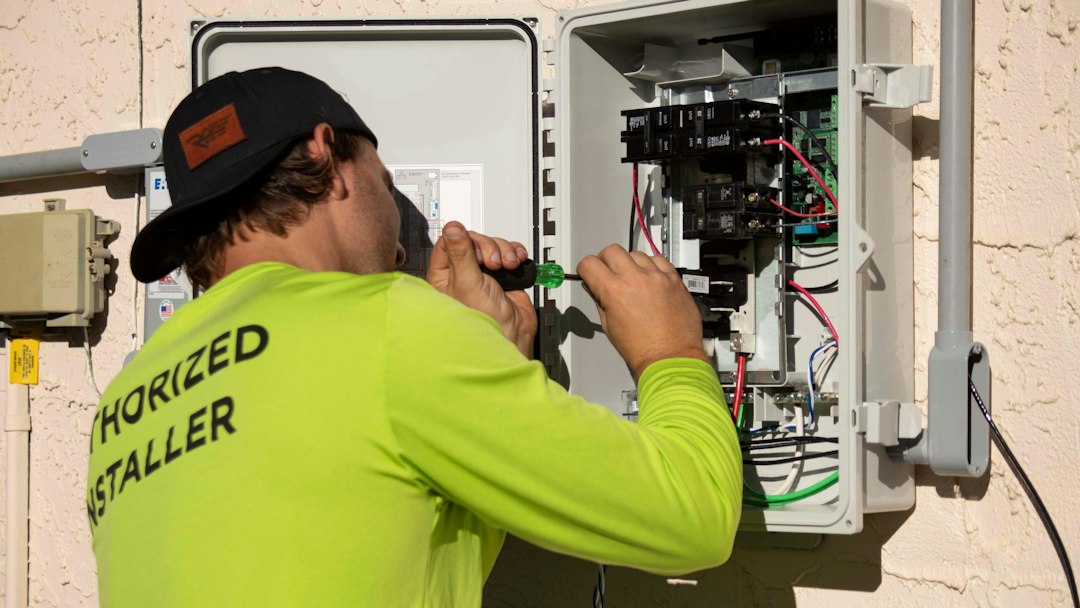 Photo by Raze Solar via Unsplash (source)
Related reading: housing associations, tenants, contractors, retrofit evidence in practice, About Tricity Labs, the Tricity Labs platform
Sources
About Tricity Labs
The team behind Tricity Labs' Verity platform, delivering independent pre- and post-retrofit measurement and verification from existing smart meter data for housing associations and retrofit contractors.