Supporting Irish Housing Bodies: A Practical Guide to Protecting Tenants and Housing Stock
Supporting Irish Housing Bodies means giving Approved Housing Bodies (AHBs) the data, tools, and processes they need to protect tenants and housing stock without adding administrative burden. In practice, this comes down to three things: catching damp and mould early, deploying monitoring that doesn't disrupt tenants' lives, and using evidence rather than guesswork to prioritise repairs. This guide walks through what AHBs are, why they need this support now, and how to evaluate the options available to them.
 Photo by rotekirsche20 via Pixabay (source)
Three things to know:
- Ireland's 540+ Approved Housing Bodies now manage over 50,000 homes, and most were never resourced or staffed to monitor property conditions at this scale in real time.
- Preventing damp and mould before it becomes a health or legal issue depends on early, continuous data — not periodic manual inspections that miss problems between visits.
- Invisible sensor deployment lets AHBs collect that data without entering tenants' homes repeatedly or asking vulnerable residents to change their routines.
Key Takeaways
| Point | Detail |
|---|---|
| AHBs are independent, not-for-profit housing providers. | They are not government bodies, but they work in close partnership with local authorities and are approved under Section 6 of the Housing (Miscellaneous Provisions) Act, 1992. |
| The sector has grown quickly. | Over 540 AHBs now operate in Ireland, with a combined stock exceeding 50,000 homes — a scale that outpaces many organisations' internal capacity for hands-on condition monitoring. |
| Regulation is tightening. | AHBs are currently regulated voluntarily by the Housing Agency, with statutory regulation expected soon, meaning documentation and evidence trails will matter more, not less. |
| Damp and mould prevention is now a frontline tenant-safety issue. | Catching moisture problems early protects vulnerable tenants and reduces the reactive repair costs that stretch AHB budgets. |
| Evaluation matters as much as adoption. | Not every monitoring approach fits every housing stock; knowing how to evaluate Supporting Irish Housing Bodies technology and partners is a distinct skill from simply choosing a vendor. |
| Support should reduce administrative load, not add to it. | The most useful tools for AHBs are the ones that quietly generate evidence in the background rather than requiring extra staff time to operate. |
Table of Contents
- Approved Housing Bodies in Ireland: The Basics
- The Scale of the Challenge: Why AHBs Need Support
- A Practical Guide to Supporting Irish Housing Bodies
- How to Evaluate Supporting Irish Housing Bodies Technology and Partners
- Preventing Damp and Mould: A Core AHB Responsibility
- Invisible Sensor Deployment and Protecting Vulnerable Tenants
- Best Practices for Supporting Irish Housing Bodies Over the Long Term
- Where Tricity Labs Fits Into This Picture
- Sources
Approved Housing Bodies in Ireland: The Basics
Approved Housing Bodies, or AHBs, are independent, not-for-profit organisations that provide social and affordable housing to people who cannot afford to buy or rent on the open market. This includes people experiencing homelessness, older people, and people with disabilities, among others. AHBs are approved under Section 6 of the Housing (Miscellaneous Provisions) Act, 1992, which gives the Minister for Housing the power to grant approved status to suitable organisations so they can work alongside statutory authorities.
There are currently over 540 AHBs operating in Ireland, and collectively they house more than 50,000 families. That places them alongside local authorities — which manage roughly 140,000 dwellings — as one of the two main pillars of Ireland's social housing system. Seven of the largest AHBs, including Clúid Housing, Circle Voluntary Housing, Co-operative Housing Ireland, Oaklee, Respond, The Iveagh Trust, and Tuath Housing, form the Housing Alliance, which alone manages over 45,000 homes and delivered 6,025 new cost-rental and social homes in 2024.
AHBs are currently regulated on a voluntary basis by the Housing Agency, with statutory regulation expected in the near future. Each AHB also files audited financial statements and answers to both the Housing Regulator and the Charities Regulator, which means governance and record-keeping are already embedded in how these organisations operate — a foundation that any external support needs to build on rather than replace.
Originally explored in: About Approved Housing Bodies (AHBs) (https://housingalliance.ie/about-ahbs/)
The Scale of the Challenge: Why AHBs Need Support
Managing 50,000 homes is a very different task from managing 500. Most AHBs grew from small, community-rooted organisations into large-scale housing managers over a relatively short period, and staffing has not always kept pace with the number of properties, tenancies, and maintenance obligations involved. This gap is where practical support — technical, operational, or advisory — tends to matter most.
The pressure is compounded by the type of tenants AHBs serve. Many households include older people, people with disabilities, or people recovering from homelessness, all of whom may be less able to report problems like leaks, condensation, or mould themselves, or less able to tolerate the health effects of a damp home while waiting for a fix. Protecting vulnerable tenants in this context means catching problems before they become emergencies, not simply responding faster once a complaint is logged.
At the same time, incoming statutory regulation raises the bar for what counts as adequate oversight of housing conditions. An AHB that can show, with dated evidence, when a problem was first detected and how quickly it was addressed is in a fundamentally stronger position than one relying on tenant phone calls and periodic manual inspections.
A Practical Guide to Supporting Irish Housing Bodies
A genuinely useful Supporting Irish Housing Bodies guide starts from the constraints AHBs actually operate under: lean staffing, wide geographic spread, diverse housing stock age and condition, and tenants who may be hard to reach or reluctant to report issues. Support that ignores these constraints — no matter how well-intentioned — tends to sit unused.
In practice, useful support tends to fall into three categories: funding and resourcing advice, operational tools that reduce manual workload, and independent, evidence-based information that helps housing officers make decisions. Funding routes matter because most AHBs draw on local authority and government funding streams to build, buy, or lease homes, and understanding those routes shapes what technical support is even feasible to adopt.
Operational tools matter because they determine whether good intentions translate into daily practice. A monitoring system that requires a housing officer to manually check dozens of properties every week will inevitably fall behind; one that surfaces only the properties that need attention, backed by continuous data, fits into how stretched teams actually work.
Before adopting any new tool or process, ask whether it reduces a housing officer's weekly workload or adds to it. Support that requires more staff time to maintain than it saves rarely survives contact with a busy housing team.
How to Evaluate Supporting Irish Housing Bodies Technology and Partners
Knowing how to evaluate Supporting Irish Housing Bodies technology is different from simply comparing price lists. The first question is independence: does the data or advice come from a source with no stake in exaggerating a problem, or minimising a risk, to sell a follow-on service? Evidence-based, plain-language reporting should be the baseline expectation, not a premium feature.
The second question is fit with existing housing stock. Older stock, timber-frame builds, and high-density apartment blocks all behave differently when it comes to moisture, ventilation, and heat loss, so a one-size-fits-all monitoring approach will under-serve some properties and over-serve others. A short checklist can help housing officers compare options consistently rather than being swayed by whichever vendor presents best.
A workable Supporting Irish Housing Bodies checklist should cover: does the approach require tenant disruption to install or maintain; does it generate dated, exportable evidence rather than just an internal dashboard; does it distinguish between urgent and low-priority findings; and does it come from an organisation willing to explain its methodology rather than treating it as a black box. Any option that fails more than one of these should be treated with caution.
Finally, ask what happens to the data itself — who owns it, how long it is retained, and whether it can be handed over cleanly if the AHB changes provider later. Long-term flexibility matters more than short-term convenience.
Preventing Damp and Mould: A Core AHB Responsibility
Damp and mould are not cosmetic issues. They are a recognised health hazard, particularly for children, older residents, and people with respiratory conditions — groups that are over-represented among AHB tenants. Preventing damp and mould before it takes hold is both a tenant welfare responsibility and, increasingly, a compliance and reputational one for housing providers.
The practical difficulty is that damp and mould usually develop gradually and out of sight — behind furniture, inside wall cavities, under flooring — long before they become visible or are reported. By the time a tenant notices black spotting on a wall, the underlying moisture problem may have been building for weeks or months, and the remediation required is far more disruptive and costly than early intervention would have been.
This is why continuous, low-level monitoring of humidity, temperature, and ventilation patterns is more effective than relying on scheduled inspections or tenant self-reporting. A property that shows a slow upward drift in humidity over several weeks is showing a solvable problem; the same property discovered only after visible mould has spread is showing an expensive one.
Look for humidity trends over time, not single readings. A one-off high reading might just mean someone was cooking or showering; a sustained upward trend over weeks is the signal worth acting on.
Invisible Sensor Deployment and Protecting Vulnerable Tenants
Invisible sensor deployment refers to installing monitoring equipment that operates quietly in the background, without requiring repeated home visits, disruptive installation work, or ongoing input from the tenant themselves. For AHB tenants — many of whom are older, have mobility issues, or simply value the privacy of their own home — this matters as much as the data the sensors produce.
A monitoring approach that respects a tenant's home and routine tends to get better cooperation and better long-term data than one that feels intrusive. Small, unobtrusive sensors that require no tenant maintenance and generate no disruption to daily life allow AHBs to build a genuine, continuous picture of property conditions without the friction that undermines many well-meaning monitoring schemes.
Protecting vulnerable tenants, in this sense, is not just about acting quickly once a problem is found — it is about designing the detection method itself so it never becomes a burden on the person living in the home. That distinction is often what separates monitoring programmes that tenants tolerate from ones they actively support.
Best Practices for Supporting Irish Housing Bodies Over the Long Term
Sustainable support for AHBs is rarely a single tool or a single funding round; it is an ongoing practice built around a few consistent habits. The first is treating condition data as a shared resource across maintenance, tenancy management, and governance teams, rather than something that sits in one department's inbox.
A second best practice is regularly revisiting funding and resourcing options rather than assuming the arrangement in place today will still be the best fit in two or three years, as regulation and housing stock both evolve. The third is documentation discipline: keeping a clear, dated record of when issues were detected, what action was taken, and how quickly, since this is exactly the kind of evidence that upcoming statutory regulation is likely to expect.
Among the wider set of Supporting Irish Housing Bodies best practices, perhaps the most overlooked is simply asking tenants what is and isn't working for them, rather than only measuring what the sensors report. Data tells you what is happening in a property; conversations with tenants often explain why.
Where Tricity Labs Fits Into This Picture
Tricity Labs was built around the same problem this guide has been describing: AHBs need continuous, evidence-based visibility into property conditions, without adding staff workload or disrupting tenants' homes. Our Verity platform is designed around invisible sensor deployment, so housing officers get early warning of damp and humidity risk without repeated site visits or intrusive installation work.
We don't position ourselves as a replacement for an AHB's own housing management expertise — we position ourselves as an independent, plain-language layer of evidence that supports the decisions housing officers are already making. That's consistent with the approach set out throughout this Supporting Irish Housing Bodies guide: reduce workload, protect vulnerable tenants, and generate dated records that hold up under future regulation.
If your organisation is working through a checklist for evaluating monitoring or funding options, our RoI and Funding pages walk through the practical numbers, and our FAQ answers the questions housing teams ask most often before making a decision.
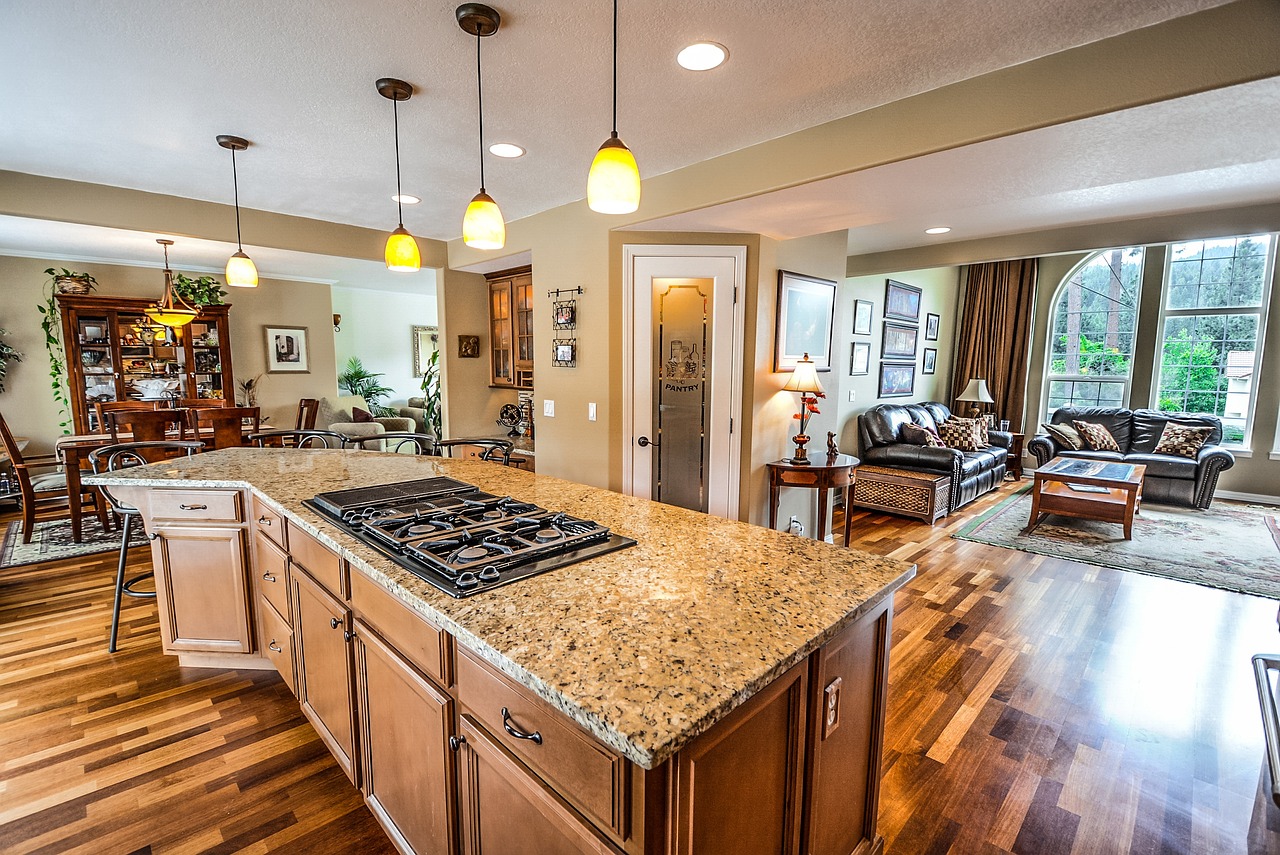 Photo by user32212 via Pixabay (source)
Related reading: explore Tricity Labs' approach to housing conditions, see the RoI case for AHBs, review funding options for housing bodies, learn how Verity supports invisible sensor deployment, read common questions in our FAQ, jump to the main guide content