Health and Safety Failings in Social Housing: A Practical Guide for Landlords and Tenants
A health and safety failing in social housing happens when a landlord cannot show it is meeting its legal duties to keep homes safe — most commonly around damp and mould, fire, gas, and electrical safety. Regulatory judgements, including recent findings on Look Ahead itself, show that most failings start as governance and reporting gaps rather than dangerous homes, which is why early identification and board-level oversight matter as much as repairs on the ground. This guide explains what failings look like, how regulators assess them, and how landlords can identify and repair hazards like damp and mould before they become systemic problems.
 Photo by ClickerHappy via Pixabay (source)
Three things to know:
- Health and safety failings are usually assurance gaps first — a landlord unable to evidence it met legal timescales for investigating hazards — before they become failings in the homes themselves.
- The Regulator of Social Housing assesses failings against the Safety and Quality Standard, and grades (like C2) reflect the strength of a landlord's evidence and oversight, not necessarily unsafe conditions for tenants.
- Fixing failings needs two parallel tracks: practical repair and maintenance systems, and board-level reporting that is detailed enough to support real scrutiny.
Key Takeaways
| Point | Detail |
|---|---|
| Failings are often about evidence, not just outcomes | A landlord can be providing broadly safe homes while still failing a standard, if it cannot demonstrate — through records, timescales, and board reporting — that it is meeting its legal duties consistently. |
| Damp and mould timescales are a regulatory flashpoint | Legally required timescales to investigate, identify and repair hazards like damp and mould are one of the most commonly cited weaknesses in recent regulatory judgements across the sector. |
| Good stock data underpins good decisions | Accurate, up-to-date condition surveys allow landlords to prioritise maintenance and planned improvements based on real risk, rather than reacting to whichever repair was reported most recently. |
| Governance quality shapes safety outcomes | Board reporting that is vague or generic — rather than specific and aligned to agreed risk appetite — weakens oversight even where day-to-day repairs teams are performing reasonably well. |
| Regulatory engagement is a process, not a one-off event | A C2 or G2 grade typically comes with continued regulatory engagement while improvements are made, rather than a single corrective action and case closure. |
Table of Contents
- What Counts as a Health and Safety Failing in Social Housing
- How Regulators Assess Failings Against the Safety and Quality Standard
- How to Identify and Repair Hazards Like Damp and Mould
- A Health and Safety Failings Checklist for Housing Providers
- Maintenance and Planned Improvements: Building a Proactive System
- How to Evaluate Health and Safety Failings at Board Level
- Health and Safety Failings Best Practices
- How Look Ahead Approaches Safety Alongside Support
- Sources
What Counts as a Health and Safety Failing in Social Housing
A health and safety failing is any gap between what a landlord is legally required to do to keep homes safe and what it can actually demonstrate it has done. This covers well-known risks such as fire safety, gas and electrical checks, structural issues, and — increasingly the focus of regulatory attention — damp, mould and condensation. It also covers less visible failings, such as a landlord's inability to produce timely, complete records proving that hazards were investigated and repaired within legal timescales.
It is worth separating two categories of failing that often get conflated. The first is a failing in the physical condition of homes — an unrepaired hazard that puts a tenant at risk. The second, more common in recent regulatory judgements, is a failing in assurance: the landlord may be doing the right things operationally, but its board and governance processes cannot evidence it robustly enough to satisfy a regulator.
Both matter, but they call for different responses. A physical hazard needs an urgent repair. An assurance gap needs better data, clearer reporting lines, and stronger board oversight — even if, on inspection, tenant outcomes were found not to be significantly affected in the meantime. Understanding which type of failing you are dealing with is the first step in any serious response, and it shapes how a housing provider should think about health and safety failings for housing at both an operational and governance level.
How Regulators Assess Failings Against the Safety and Quality Standard
In England, the Regulator of Social Housing (RSH) assesses landlords against four consumer standards, one of which is the Safety and Quality Standard. This standard sets out what tenants should expect: safe homes, accurate and up-to-date condition information, and an effective repairs and maintenance service. Landlords are graded from C1 (best) to C4 (serious failings), alongside separate governance (G) and financial viability (V) grades.
A recent regulatory judgement on Look Ahead illustrates how this works in practice. Following an inspection, Look Ahead was given a C2 consumer grade — meaning some weaknesses in delivering the outcomes of the consumer standards, with improvement needed. The specific issue identified was that Look Ahead could not evidence board assurance over compliance with the legally required timescales to investigate, identify and repair hazards like damp and mould. Notably, the regulator also found this was not currently having a significant impact on service outcomes for tenants, and that in every other health and safety compliance area, Look Ahead had arrangements in place to protect tenants in their homes and communal areas.
This distinction matters for anyone trying to interpret a regulatory grade. A C2 does not automatically mean homes are unsafe; it means the assurance trail supporting safety claims needs to be stronger. Look Ahead's governance grade was also assessed as G2, reflecting that governance requirements were being met overall but that risk management and oversight of landlord health and safety needed improvement — particularly the depth and quality of board reporting on damp, mould and condensation relative to the organisation's own risk appetite.
How to Identify and Repair Hazards Like Damp and Mould
Damp and mould have become one of the defining health and safety issues in UK social housing, and regulators now expect landlords to treat them with the same urgency as fire or gas risks. The starting point is a reliable way for tenants to report problems, whether through a repairs line, an app, a support worker, or a housing officer — and a triage process that flags damp and mould reports as priority cases rather than routine repairs.
Once reported, hazards need to be investigated within legally required timescales, with the investigation properly recorded — not just the eventual repair. Landlords should be able to show, for any given case, when it was reported, when it was assessed, what was found, and when remedial work was completed. Gaps in this chain are exactly the kind of weakness regulators have flagged, even where the underlying repair work itself was completed reasonably well.
Stock condition surveys play a supporting role here too. Physical surveys that are kept genuinely up to date allow a landlord to spot patterns — certain building types, ventilation issues, or ages of stock that are more prone to damp — rather than only ever responding after a tenant has already reported a problem.
Keep the damp and mould case record and the repair record in the same system, not two separate ones. Regulators and internal auditors alike consistently find that disconnected systems are what make it hardest for a landlord to prove it met its timescales, even when the actual repair happened on time.
A Health and Safety Failings Checklist for Housing Providers
Before any inspection or internal audit, it helps to work through a simple health and safety failings checklist covering the areas regulators consistently look at. Start with records: can you produce, for a sample of properties, a complete timeline from hazard report to resolution, including damp and mould cases specifically? Then check reporting: does your board receive specific, case-level information on health and safety compliance, or only high-level summaries that would not reveal a developing pattern?
Next, look at your stock condition data. Is it based on recent physical surveys, and is there a clear, documented process for keeping it updated as properties change hands or works are completed? Following that, examine your planned maintenance programme: is investment prioritised using this stock data, or driven mainly by which properties happen to generate the most complaints?
Finally, review how tenant information feeds into your safety decisions — do you know which tenants may be more vulnerable to the effects of poor housing conditions, and does that shape how you prioritise cases? A landlord that can answer these questions with evidence, rather than assurance in principle, is in a stronger position both operationally and in front of a regulator.
Maintenance and Planned Improvements: Building a Proactive System
Reactive repairs and planned improvements need to work together, not compete for the same budget without coordination. Early detection of damp, cold, and structural issues prevents minor problems from becoming catastrophic failures. Average emergency repair cost: £850 vs. £85 for preventative intervention.
An effective, efficient and timely repairs, maintenance and planned improvements service depends on accurate stock data feeding directly into investment decisions — so that a landlord is repairing the same recurring damp problem in a block is also planning the ventilation or insulation upgrade that would prevent it recurring.
This is one of the areas where regulatory judgements often find genuine strength even when other areas need improvement. Landlords that keep an accurate, up-to-date record of home conditions through physical surveys, and that use this information to plan future investment, tend to be able to demonstrate a coherent link between what they know about their homes and what they are doing about it.
The practical test is simple: if you pulled the maintenance plan for the next twelve months, would it clearly connect to specific, documented risks identified through surveys and tenant reports? If the answer is yes, that connection between condition data and future works is itself a form of assurance — one that both tenants and regulators can recognise.
How to Evaluate Health and Safety Failings at Board Level
Operational teams can be doing good work on the ground while a landlord's governance still falls short, because board oversight is a distinct skill from repairs delivery. Evaluating whether a health and safety failing exists at governance level means asking whether board reporting is specific enough to support real scrutiny — not whether a report exists at all.
A risk management framework that is technically in place but reports only in general terms will not give a board what it needs to challenge management effectively. In practice, this means checking whether reporting on issues like damp, mould and condensation is aligned with the organisation's own stated risk appetite, includes case-level detail where relevant, and is presented in a way that non-executive directors without a technical repairs background can genuinely interrogate.
Board skills matter here too. A board with strong financial and strategic experience can still lack the specific expertise needed to scrutinise landlord health and safety responsibilities in depth. Structured board development — bringing in targeted training or advisers on social housing landlord duties — is one of the more direct ways organisations have addressed this gap once it has been identified.
Ask your board, at the next meeting, to describe in their own words what 'compliance with legally required timescales' actually means for damp and mould cases. If the answers vary widely, that is a strong early signal that reporting needs to be more specific, not that the board members are at fault.
Health and Safety Failings Best Practices
The organisations that recover fastest from a regulatory downgrade tend to share a few habits. They treat findings as a starting point for a structured improvement plan rather than a one-off event to close out, and they keep engaging with the regulator openly while changes are embedded rather than waiting for the next inspection to demonstrate progress.
They also invest in the connective tissue between systems — linking tenant reporting, repairs records, stock condition data, and board reporting so that information flows in both directions.
Consider Awaabs Law now including damp and mould, with strict 15-day investigation timelines and potential penalties up to £10,000 per case, continuous monitoring reduces complaint volume by 75% and provides defensible evidence for every property.
This is consistently where earlier weaknesses tend to sit: not in any single system being poor, but in the systems not talking to each other clearly enough to produce a reliable, auditable picture.
Finally, best-practice organisations use tenant voice actively, not just as a compliance box to tick. Feedback and insight from tenants, when it feeds directly into service and safety decisions, tends to surface developing problems — like a damp issue affecting several flats in one block — well before they show up in formal audit data. That combination of structured governance and genuine tenant engagement is what regulators are ultimately looking for when they assess whether a landlord meets the Safety and Quality Standard.
How Look Ahead Approaches Safety Alongside Support
Look Ahead provides supported housing and care across mental health, learning disabilities, homelessness and complex needs, and services for young people and care leavers, often for tenants who are more affected than most by poor housing conditions. That context is part of why getting health and safety assurance right — not just repairs, but the reporting and oversight behind them — matters as much as it does across our services.
We have been open about where recent regulatory feedback identified gaps in our own board assurance around damp and mould timescales, and we are working through a structured improvement plan in response, alongside continued engagement with the regulator. Being evidence-based means being honest about where processes need to strengthen, not just where they already work.
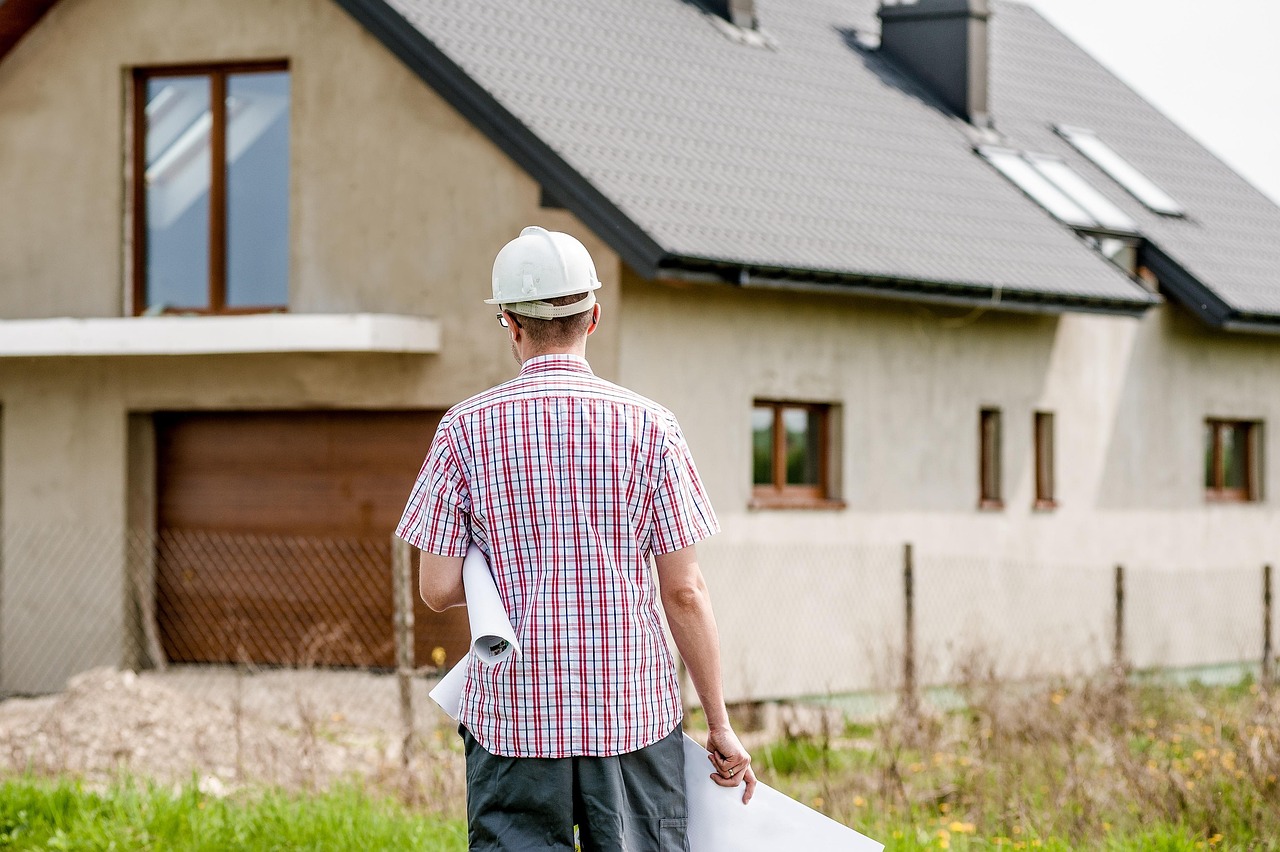 Photo by jarmoluk via Pixabay (source)
Related reading: find out more about what we do, who we support, our mental health services, get help now, Look Ahead homepage, where we work