
Grant Funding Availability: A Practical Guide for Social Housing Retrofit
By Tricity Labs, Technical Team — Independent retrofit measurement & verification, working to BS 40101 principles
Grant funding availability for social housing retrofit is real and substantial across England, Scotland, Wales, and Ireland, but the money increasingly comes tied to evidence requirements, not just installation numbers. Smart heating controls and environmental monitoring are explicitly eligible measures under every major scheme in the four nations, and in several cases the evidence layer itself is now a condition of funding rather than an optional extra. This guide sets out what's currently available, how to evaluate it against your own portfolio, and what to check before you commit capital works to a scheme.
 Photo by ptrabattoni via Pixabay (source)
Three things to know:
- Smart heating controls and environmental monitoring are named eligible measures under England's Warm Homes: Social Housing Fund and ECO4, Scotland's Social Housing Net Zero Heat Fund, Wales's Optimised Retrofit Programme, and Ireland's SEAI and DHLGH schemes.
- Funders and auditors are shifting from modelled EPC improvements to measured, per-home performance evidence — meaning grant capex funding decisions increasingly hinge on what you can prove, not just what you install.
- Wales currently has the strongest funding case because environmental monitoring is mandatory under the Optimised Retrofit Programme, not discretionary — a distinction that changes how you should plan capex.
Key Takeaways
| Point | Detail |
|---|---|
| England's landscape is fragmented but active | The Warm Homes: Social Housing Fund, ECO4 (running to December 2026), and the Warm Homes: Local Grant all currently fund elements of retrofit. Smart heating controls already account for roughly 8% of all WH:SHF installations, and Awaab's Law Phase 2 from November 2026 adds a mandatory environmental monitoring requirement that will interact directly with funded works. |
| Scotland is heat-pump-led | The £200 million Social Housing Net Zero Heat Fund centres on clean heating and energy efficiency, with smart controls treated as central to funded heat pump projects. Continuous performance monitoring is increasingly expected to align with the evidence requirements set out in Scotland's Heat in Buildings Strategy. |
| Wales sets the highest bar — and the clearest funding case | £98.75 million has been confirmed for the Optimised Retrofit Programme in 2026/27, and environmental monitoring is mandatory, not optional, under that scheme. That single requirement makes Wales the nation where the funding case for monitoring technology is least ambiguous. |
| Ireland offers the highest percentage coverage | The €558 million National Residential Retrofit Plan 2026, combined with increased AHB grant support, means combined SEAI and EEOS funding can exceed 90% of project costs in some cases, with heat pump grants up to €12,500. Heating controls are eligible, and AHBRA welfare monitoring adds a further driver. |
| Evidence is the common thread, not the exception | Across all four nations, funders and regulators are moving away from accepting modelled savings and toward requiring measured, dated, per-home evidence of what a retrofit actually achieved — a requirement that now sits alongside, not after, the capital funding decision. |
| BS 40101 is becoming a reference point | Independent M&V (measurement and verification) evidence aligned to BS 40101 building performance evaluation is increasingly expected at funder audit, even where it isn't yet written into scheme rules as a hard condition. |
Table of Contents
- What Grant Funding Availability Actually Means for Housing Providers
- How to Evaluate Grant Funding Availability Across the Four Nations
- Funded Retrofit Works: What's Actually Eligible
- Grant Capex Funding and the Evidence Trap
- Grant Funding Availability Checklist
- Grant Funding Availability Best Practices
- Common Mistakes When Assessing Grant Funding Availability
- Where Independent Evidence Fits Into a Grant Funding Plan
- Sources
What Grant Funding Availability Actually Means for Housing Providers
Grant funding availability sounds like a simple yes/no question — is there money, or isn't there — but for anyone actually running a retrofit programme it's closer to a moving target. Availability covers three separate things at once: whether a scheme exists for your geography and measure, how much of its budget is left, and what conditions you have to meet to draw it down. A scheme can be technically open while its practical availability has already shrunk, because early rounds spent faster than expected or eligibility criteria tightened after launch.
This matters because housing associations and local authorities often plan capital programmes 12–24 months ahead, while grant rounds, budget top-ups, and closing dates move on much shorter cycles. Treating a funding guide as a one-off reference rather than something to revisit quarterly is one of the most common ways organisations miss windows they were technically eligible for.
This guide focuses on the four nations of the UK and Ireland, where retrofit funding for social housing is most active: England, Scotland, Wales, and Ireland. Each has a different mix of schemes, a different definition of what counts as an eligible measure, and — increasingly — a different evidence bar attached to the money.
Set a recurring calendar reminder to re-check scheme status every quarter, not just at the start of a capital planning cycle. Grant pots close early far more often than they get extended.
How to Evaluate Grant Funding Availability Across the Four Nations
In England, the picture is currently split across three live routes: the Warm Homes: Social Housing Fund, ECO4 (which runs to December 2026), and the Warm Homes: Local Grant. Smart heating controls are explicitly named as eligible under WH:SHF and already represent around 8% of its installations. From November 2026, Awaab's Law Phase 2 adds a separate, mandatory driver for environmental monitoring that sits alongside — not instead of — these funding routes.
Scotland's main vehicle is the £200 million Social Housing Net Zero Heat Fund, which leans heavily toward clean heating rather than fabric measures. Smart controls are treated as central to funded heat pump installations, and continuous monitoring of heat pump performance is increasingly aligned with the evidence expectations set out in the national Heat in Buildings Strategy.
Wales currently has the clearest funding case of the four nations. £98.75 million has been confirmed for the Optimised Retrofit Programme in 2026/27, and — unlike anywhere else covered here — environmental monitoring is a mandatory requirement of the scheme, not a nice-to-have. That single design choice changes how landlords in Wales should be evaluating funded retrofit works, because the monitoring cost is effectively already built into the funding logic.
Ireland's offer is the largest in percentage terms. The €558 million National Residential Retrofit Plan 2026, combined with increased Approved Housing Body grant support, can push combined SEAI and EEOS funding above 90% of total project cost, with heat pump grants up to €12,500 and heating controls eligible throughout. AHBRA's welfare monitoring requirements add a further, separate reason to build monitoring into any funded programme.
Don't evaluate a scheme purely on headline funding percentage. A lower percentage with mandatory monitoring baked in, like Wales's ORP, can be a stronger and simpler business case than a higher percentage scheme where monitoring is optional and has to be justified separately.
Funded Retrofit Works: What's Actually Eligible
It's worth being precise about what counts as funded retrofit works, because the category is broader than fabric measures like insulation and windows. Across all four schemes covered here, smart heating controls and environmental monitoring both qualify as eligible measures in their own right — not as add-ons to a heat pump or insulation job, but as fundable work in themselves.
That distinction matters for procurement. If a housing association treats monitoring as a bolt-on cost outside the retrofit budget, it risks paying for it twice — once informally through operational budgets, and again when a funder or auditor later asks for evidence the association didn't realise it needed to produce. Building monitoring into the funded scope from the outset avoids that.
The practical upshot is that housing associations, and the contractors delivering works on their behalf, should be checking eligibility criteria for monitoring and controls at the same stage they check eligibility for insulation, heating systems, or ventilation — not afterwards.
Grant Capex Funding and the Evidence Trap
Grant capex funding almost always covers the physical installation — the boiler, the heat pump, the sensor, the control unit. What it doesn't automatically cover is the ongoing measurement layer that proves the installation is doing what it was funded to do. That gap between capital spend and evidence generation is where a growing number of retrofit programmes run into trouble at audit.
The pattern across England, Scotland, Wales, and Ireland is consistent: funders are moving away from accepting modelled EPC improvements as proof of impact, and toward requiring measured, dated, per-home performance data. A retrofit that was correctly installed and fully eligible under the scheme rules can still fail an audit if the organisation can't produce independent evidence of what it actually achieved once occupied.
This is also why the strongest funding cases — Wales's ORP being the clearest example — treat monitoring as mandatory rather than optional. It removes the ambiguity about whether evidence generation is "in scope" for the grant, and it means the cost of producing that evidence doesn't fall on the landlord's operational budget after the capital project has closed.
Ask your funder or scheme administrator, in writing, whether M&V evidence aligned to BS 40101 is expected at audit — even if it isn't stated as a hard condition. Several schemes are moving this way informally before it becomes a written requirement.
Grant Funding Availability Checklist
Before committing a capital programme to a specific scheme, it's worth working through a short, deliberately unglamorous checklist. First: confirm the scheme is open in your geography and check the current remaining budget, not just the headline figure announced at launch. Second: confirm which measures are explicitly named as eligible — smart heating controls and environmental monitoring should be checked individually, since some schemes list them separately with different conditions.
Third: identify whether monitoring or evidence generation is mandatory, encouraged, or silent under the scheme rules, and plan procurement accordingly. Fourth: check the audit and reporting cycle — some schemes require evidence at completion, others require ongoing reporting over a multi-year period, which has real implications for what tools you need in place before works start, not after.
Fifth: confirm whether the evidence provider needs to be independent of the installer or contractor delivering the works. This is increasingly relevant where funders want assurance that performance data hasn't been generated by a party with a commercial interest in the result. Working through this checklist before tendering, rather than after works are underway, is the single most reliable way to avoid a funding shortfall discovered too late to fix.
Grant Funding Availability Best Practices
The organisations that draw down grant funding most consistently tend to do a few things differently. They treat funding availability as a live tracking exercise across all applicable schemes, rather than a single application built around one grant round. They also separate the question of "is this measure eligible" from "can we prove it worked" — and resource both, rather than assuming the second follows automatically from the first.
A further best practice worth adopting: build the evidence relationship independently of the delivery contract wherever possible. An installer or contractor reporting on the performance of its own installation carries an inherent conflict of interest that funders and regulators are increasingly alert to, even where the reporting is entirely honest. Separating delivery from evidence isn't bureaucratic caution — it's what makes the resulting data defensible at audit.
Finally, it's worth revisiting scheme rules at fixed intervals rather than once at the start of a programme. Eligibility criteria, budget levels, and evidence requirements have all shifted materially within single funding cycles across the four nations covered here, and a plan built on last year's rules can leave real money on the table.
Keep a single internal document tracking scheme status, remaining budget, eligible measures, and evidence requirements per nation or scheme. Update it at each capital planning cycle rather than rebuilding it from scratch each time.
Common Mistakes When Assessing Grant Funding Availability
The most common mistake is treating grant funding availability as static — assuming that because a scheme was open and well-funded last quarter, it still is. Budgets get topped up, but they also close early, and eligibility windows can narrow without much public notice between announcements.
A second common mistake is underestimating the evidence requirement until it's raised at audit, by which point it's too late to retroactively produce measured data for works already completed. Retrofit that was correctly and eligibly installed can still create funding risk if the organisation can't demonstrate its performance independently, especially as schemes across all four nations continue moving in that direction.
A third mistake is relying on the contractor delivering the works to also generate the evidence proving those works succeeded. It's understandable — it's often the path of least resistance procurement-wise — but it weakens the credibility of the evidence exactly when it's most likely to be scrutinised, which is at funder audit or in the event of a dispute.
Where Independent Evidence Fits Into a Grant Funding Plan
Tricity Labs built Verity for exactly that evidence layer — continuous, measured, dated, and independent of any retrofit delivery interest. Because Verity has no stake in the outcome of the works it monitors, the data it produces is defensible in exactly the audit conversations where self-reported contractor data tends to draw the most scrutiny. It sits alongside the funded works rather than adding a separate procurement line, since smart heating controls and environmental monitoring are already eligible measures in their own right under every scheme covered in this guide.
If you're working through funding options for a retrofit programme and want to check where a specific scheme's evidence requirements land, the retrofit evidence overview on our platform is a reasonable place to start, alongside a direct conversation about your portfolio and geography.
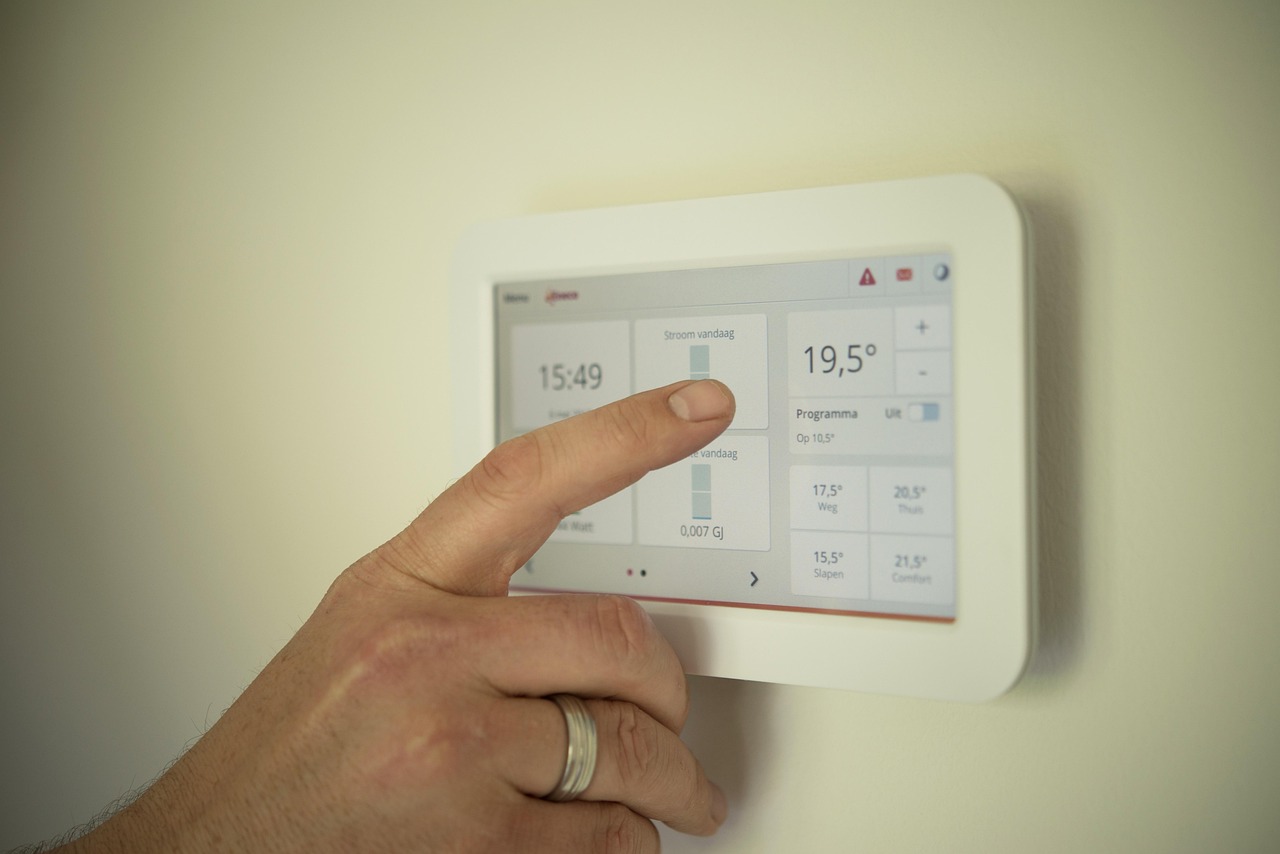 Photo by ClickerHappy via Pixabay (source)
Related reading: housing associations, retrofit evidence overview, contractors delivering funded works, tenants affected by retrofit programmes, Verity platform, about Tricity Labs
Sources
About Tricity Labs
The team behind Tricity Labs' Verity platform, delivering independent pre- and post-retrofit measurement and verification from existing smart meter data for housing associations and retrofit contractors.